

There are quite a few elements that have to work together to make a quality pair of boxing shoes. Traction and support are two of the most important factors to focus on. There are a lot of other things as well, which we’ll be going over in this article. And just to clear things up, boxing shoes are different from wrestling shoes. Although they may look very similar, boxing shoes have a bit more traction than wrestling shoes. However, that’s not to say you can’t wear wrestling shoes while boxing. They’ll work just fine although more seasoned boxers might want more specialized shoes when it comes down to the nitty-gritty. But for those who are having a hard time finding boxing shoes, wrestling shoes will work in a pinch. To each their own, but with that said, let’s learn how to choose boxing shoes.
How to Choose Boxing Shoes Infographic
How to Choose Boxing Shoes: In-Depth
Step 1: Discover the Anatomy
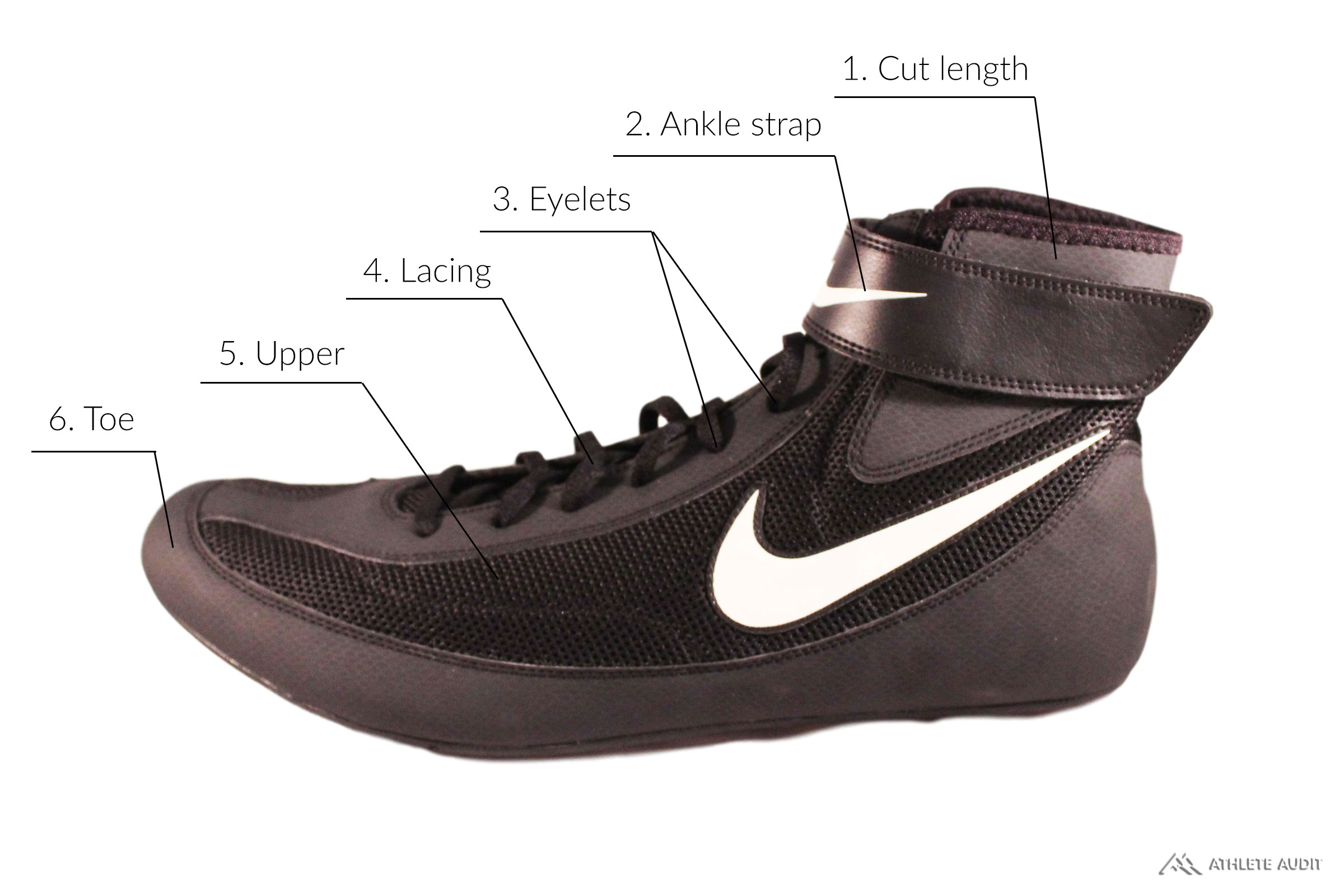
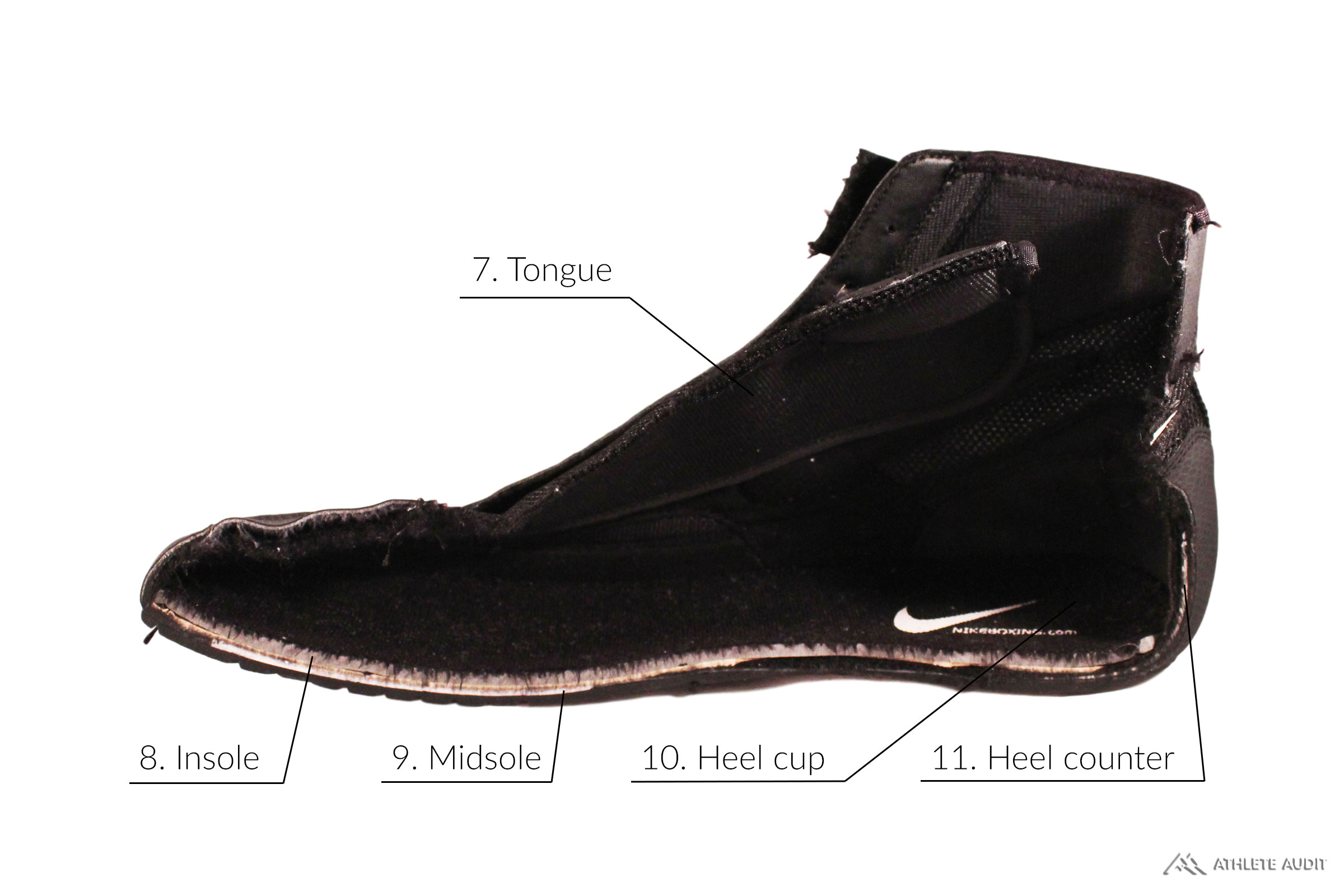
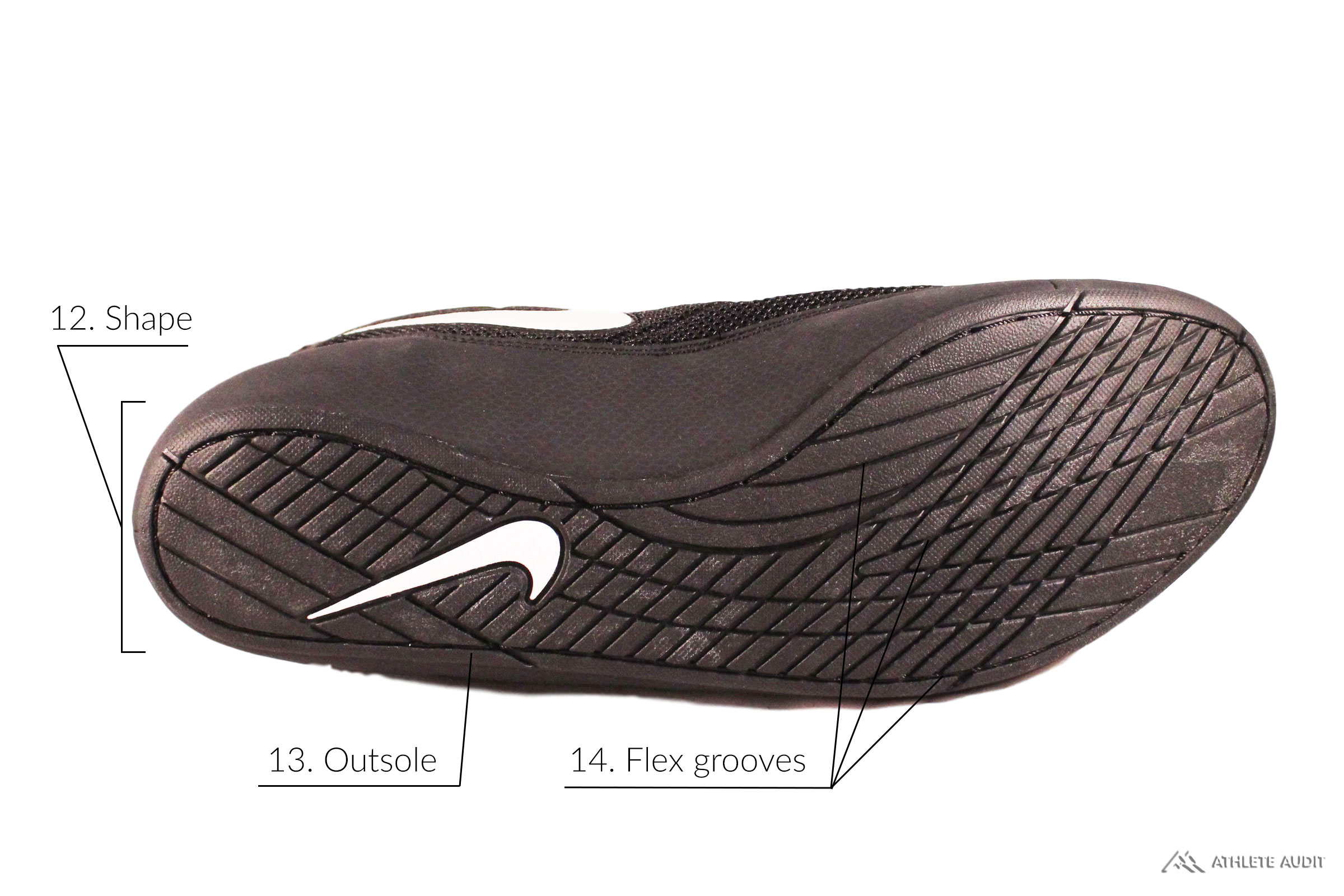
- Cut length - Boxing shoes come in either mid-cut or high-top lengths, with varying degrees of ankle support and mobility
- Ankle strap - Not all boxing shoes will have ankle straps, but if they do, they’re for added ankle support and locking your foot in
- Eyelets - Holes in the upper keeps laces in place
- Lacing - Laces are the most popular option as they allow minute adjustments in tension, although some have zippers and straps which are quicker to adjust
- Upper - Usually made of a lightweight leather or synthetic leather with mesh or ventilation holes added for breathability
- Toe - A toe cap helps to improve durability when pivoting and staying on your toes
- Tongue - A thin and breathable tongue comes standard in most boxing shoes
- Insole - Essentially the footbed for your feet, can be removable in some cases. Provides comfort and support
- Midsole - A thin midsole provides some cushioning without compromising sensitivity
- Heel cup - Keeps your heel in place
- Heel counter - A plastic insert in the heel that keeps the structural integrity of the heel
- Shape - Most boxing shoes feature a narrow shape to ensure a snug fit
- Outsole - A thin and highly grippy outsole will prevent you from losing your footing on the mat
- Flex grooves - Helps increase the flexibility of the sole for dynamic movements
Step 2: Prioritize the Sole
The next thing to look at when learning how to choose boxing shoes is the sole. Boxing shoes should have sufficient grip on your feet so you don’t slip and slide on the mat. But, you don’t want too much grip to the point that it impedes on your ability to pivot on the ball of your foot. You should be able to maneuver in boxing shoes comfortably and with control. Also, when learning how to choose boxing shoes, determine whether you prefer a thicker or thinner sole. A thicker sole is more durable although a thinner sole is more flexible and gives you more feel. You’ll also want to try them out in person and make sure they allow comfortable movement, such as moving forward, backward, side-to-side, pivoting, or staying on your toes. You don’t want to be worrying about a shoe’s traction while wearing them, so make sure they feel solid and secure on your feet at all times.
Step 3: Mid-tops or High-tops?
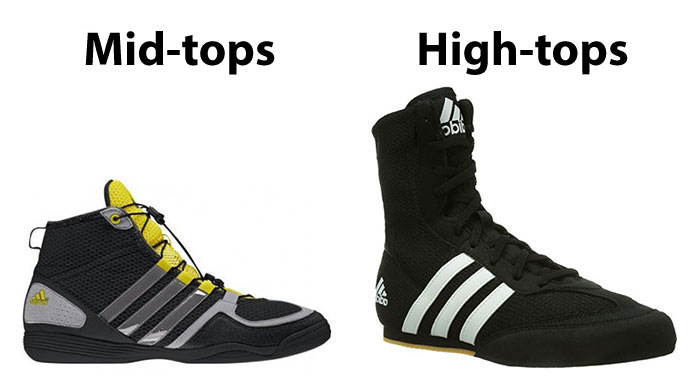
The two most popular cut lengths-mid-tops and high-tops-each has its own pros and cons. What you’ll need will depend on your preferences. Mid-tops offer greater mobility at the cost of support and protection. Most mid-tops will sit right around your ankle, some below the ankle, and some a little above. On the other hand, high-tops have more ankle and lateral support, provide better security, but lacks the mobility of a mid-top. That’s because high-tops cover the ankle which restricts movement. So, those who are prone to ankle sprains and injuries might want to opt for high-tops for more ankle support.
Step 4: Find the Right Fit
Signs of a Perfect Fit
- A snug fit width-wide with no movement, and fits the volume of your foot
- A narrow and tight fit for lateral support and foot control. Note that boxing shoes typically run narrower than street shoes
- No pain, discomfort, or chafing of the foot
Tips on Fitting Boxing Shoes
- Try on shoes in person and with socks for an accurate fit
- Walk, run, pivot, and bend in shoes to ensure comfort
- Start with your regular shoe size and try to go down half a size if you can


