

Tennis is a very fast paced sport demanding lots of stop and starts, endurance, sprinting, and side-to-side movements. All this calls for a pair of shoes that can withstand the abuse of the sport. But, not everyone’s feet are the same. Not everyone plays tennis the same. And, not everyone plays on the same court surface. Therefore, it’s important to be able to distinguish what will make a good pair of tennis shoes for you. What you need will be a delicate balance of the qualities you value most. In this guide, we’ll talk about the anatomy of a tennis shoe, types of soles, types of feet, and how to find the right fit. We’ll walk you step-by-step through the process, so let’s go ahead and learn how to choose tennis shoes already.
How to Choose Tennis Shoes Infographic
Share This Guide On Your Site
How to Choose Tennis Shoes: In-Depth
Step 1: Discover the Anatomy
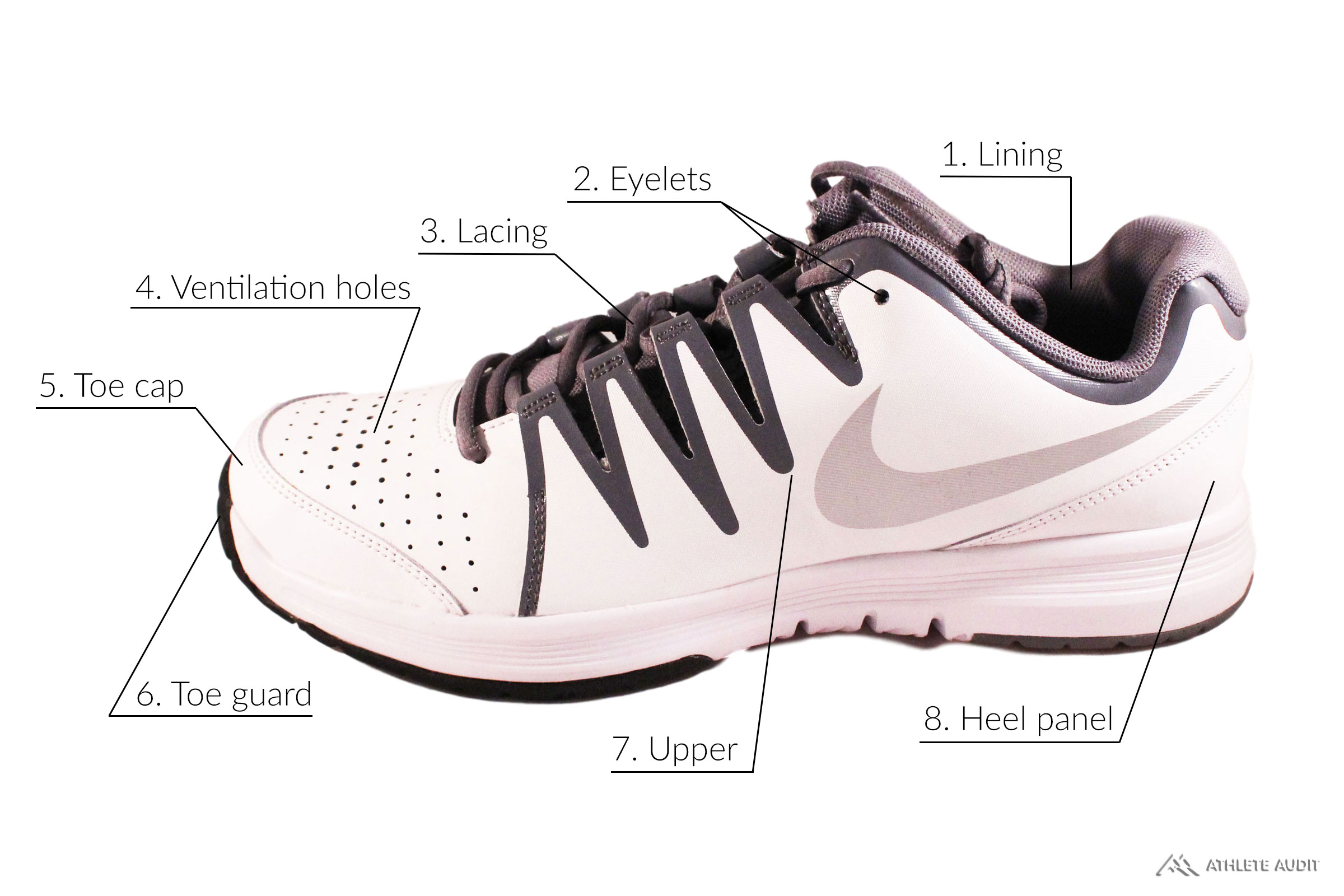
- Lining - The fabric inside of a shoe. Very soft and meant to improve comfort
- Eyelets - Holes near the top of the upper guides shoelaces in place
- Lacing - Traditional shoelaces allow for the most adjustment in fit
- Ventilation holes - Helps to add breathability to a shoe
- Toe cap - Often reinforced for improved durability
- Toe guard - Protects the toe from abrasion to increase durability. Also helps your form when keeping on your toes
- Upper - Often made of leather, synthetic, or mesh that will allow full freedom of movement and extra lateral support for side-to-side movements
- Heel panel - The piece of fabric covering the heel portion of the shoe
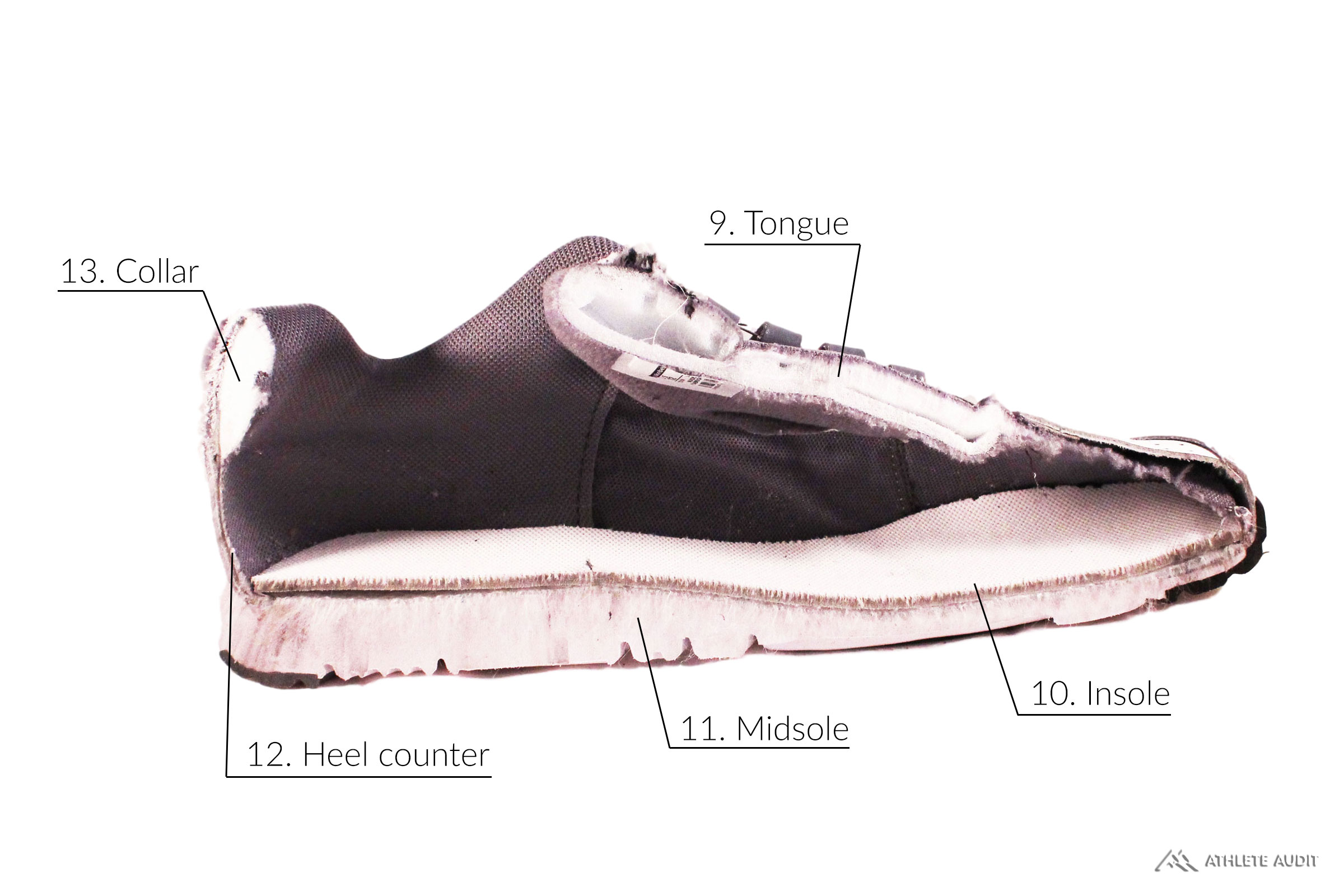
- Tongue - A lightweight, padded tongue helps to increase comfort and fit
- Insole - The footbed for your feet. Some can be removed to add your own orthotic insole
- Midsole - The cushioning in-between the insole and outsole. Often foam-based and thicker in the heel for optimal running
- Heel counter - A tough plastic insert in the back of the shoe that helps to support the heel
- Collar - A padded collar helps to improve comfort and fit
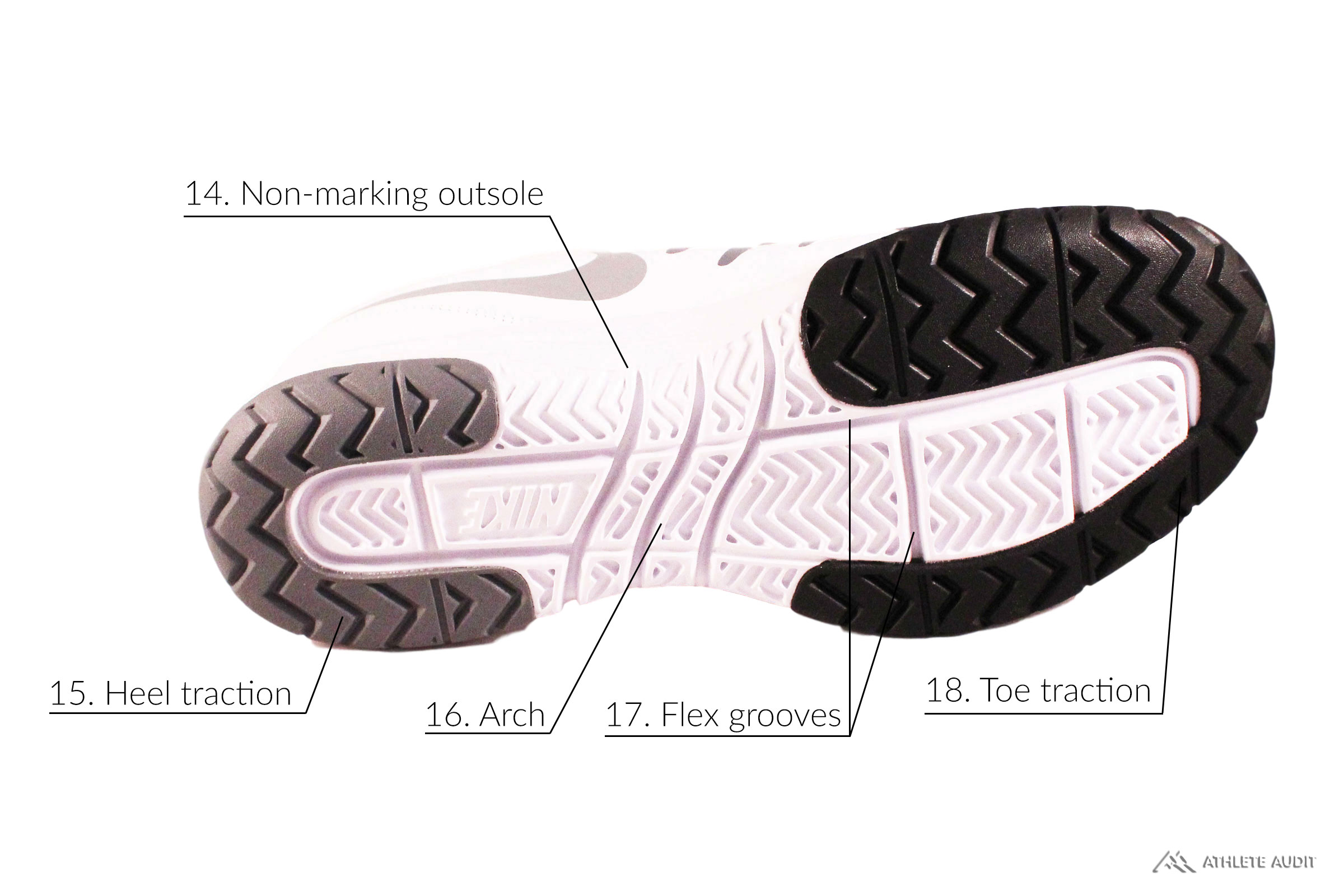
- Non-marking outsole - The bottom of the shoe that provides traction. A special non-marking rubber keeps courts streak-free
- Heel traction - Some tennis shoes have additional traction in the heel area for braking
- Arch - The middle area of a tennis shoe, could have arch support depending on model and insole type
- Flex grooves - Helps to increase the flexibility of the overall shoe when bending the forefoot
- Toe traction - Some tennis shoes have additional traction in the toe area for better grip when pivoting and staying on your toes
Step 2: Choose the Right Sole
What type of court surface you’ll be playing on the most will influence the type of shoes you’ll need. In fact, there are three types of shoes you can choose from: hard court, clay, or grass.

Hard Court
Designed with durability in mind, hard court shoes are more supportive and have an upper and sole that can withstand more abuse from quick stop-and-go movements. There is also ample amounts of cushioning to help absorb the impact of running on hard courts and flex grooves to assist with natural motion. The good thing about hard court shoes is that they can also be used on clay or grass, although they don’t excel at either.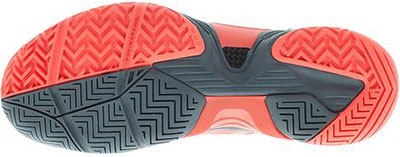
Clay
A clay tennis shoe will have a non-marking outsole that provides superior grip on clay courts. The unique tread pattern (which is usually a herringbone tread pattern) doesn’t pick up clay that much and can be easily cleaned. These shoes also have a tight fitting upper and more lateral support since clay can be harder to get a proper footing on.
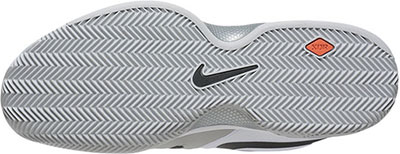
Grass
Grass tennis shoes have an outsole that is a lot flatter than any of the other types on the list, and features dozens of small rubber nubs to provide traction even on wet grass. They are also made of a non-marking rubber and are a lot more flexible.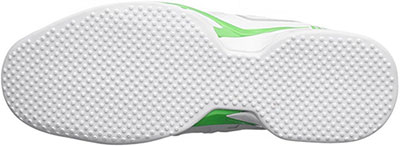
Step 3: What is Your Foot Type?
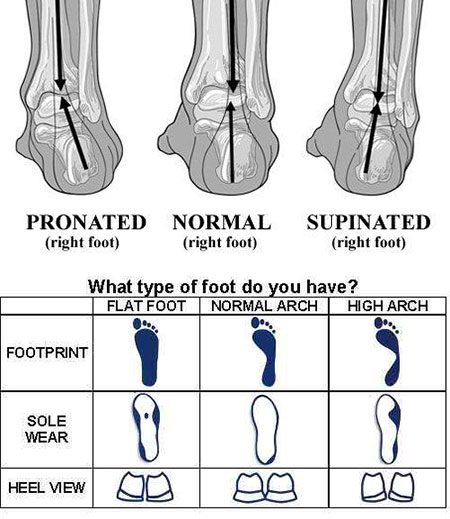 Everyone’s feet fit in either one of three types: pronated, neutral, or supinated. Essentially what this means is how your feet are aligned determines your feet placement, whether you’re standing, walking, or running. When learning how to choose tennis shoes, you’ll want to figure out your foot type to decide on how much cushioning, lateral support, and arch support you’ll need in your shoes.
The easiest way to find out your foot type is by looking at your tennis shoes and seeing where they’ve worn the most. Shoes with a lot of wear on the inside of the soles or around the ball of your foot means you have a pronated foot. If the outside of the heel or toes show wear, you have a supinated foot. Lastly if there are even amounts of wear throughout your shoe, then your foot type is neutral.
However, if you want a more accurate measurement, you can always perform a wet test. Simply wet the bottom of your foot with water and place it on a visible surface such as a brown paper bag or concrete. Now, check the imprint and see what it matches. If your arch is very thin, your feet are supinated. If the arch is as large as the rest of your foot, you have feet that tend to overpronate. And if your arch is not too thin or large, then your feet are neutral.
Know Your Foot Type
Neutral - If you have an ideal foot type, congratulations! You’ll be able to wear any type of tennis shoes as long as they’re comfortable. You could also be a foot model if you wanted to.
Supinated - Having a high arch means your feet are naturally inclined outwards. This means there isn’t a lot of inward stability so you’ll want to focus on cushioning and flexibility in a pair of tennis shoes. Neutral cushioned shoes work well with this type of foot. Supinated feet also causes shoes to wear out more quickly, so look for a very durable sole as well.
Pronated - A pronated foot equates to a low arch, which means your feet have the tendency to roll inwards, or overpronate. This can lead to injury more often than the other foot types, so you’ll want shoes that have lots of stability and lateral support. Motion control shoes are also a good choice for those who severely overpronate. You should also consider adding your own insoles or orthotics for the support you need around your arches.
Step 4: Find the Right Fit
Of course, what good is a pair of tennis shoes if they don’t feel comfortable while wearing them? They’d be absolutely good for nothing! Therefore, when learning how to choose tennis shoes, it’s crucial that you find the right fit.
Signs of a Perfect Fit
- Not too snug or loose, with around 1/4 to 1/2″ of space in the toe, with a snug forefoot and heel that doesn’t slip
- No pain, discomfort, irritation, or chafing. Any pain will be felt even more while playing
- Fits your foot’s volume and width, with appropriate arch support and cushioning
Tips for Fitting Tennis Shoes
- Wear socks you intend to play with while fitting shoes
- Shop for shoes in-store and toward the end of the day for the most accurate fit
- Consider adding your own orthotics or insoles for more comfort or a better fit
- Try out a variety of dynamic movements to make sure everything feels comfortable
- Try on different sizes of the shoes you’re looking at to find the best fit
- Know what you need before you start looking for shoes


