
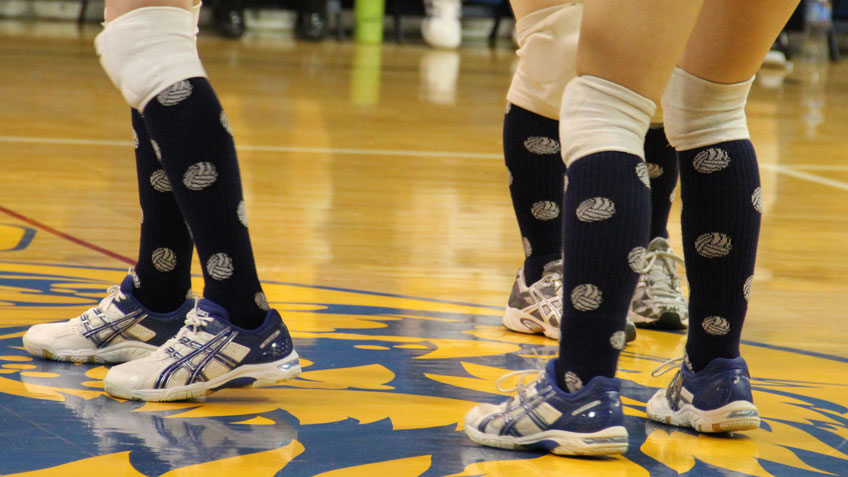
Choosing volleyball shoes isn’t exactly rocket science, but for those just starting off, it can be a little confusing. What should you prioritize? What features are optional? How do I know if the shoes fit right? These are just a few questions you might be asking yourself right now. Fortunately, we created this guide on how to choose volleyball shoes to give you some advice and go into detail what a good pair of volleyball shoes will look like. We’ll go over the different parts of the shoe, important features you should be choosing wisely (such as traction and stability), and how to size volleyball shoes correctly. With everything said and done, you should be able to pick out a perfect pair of shoes that will suit your needs in the end.
How to Choose Volleyball Shoes Infographic
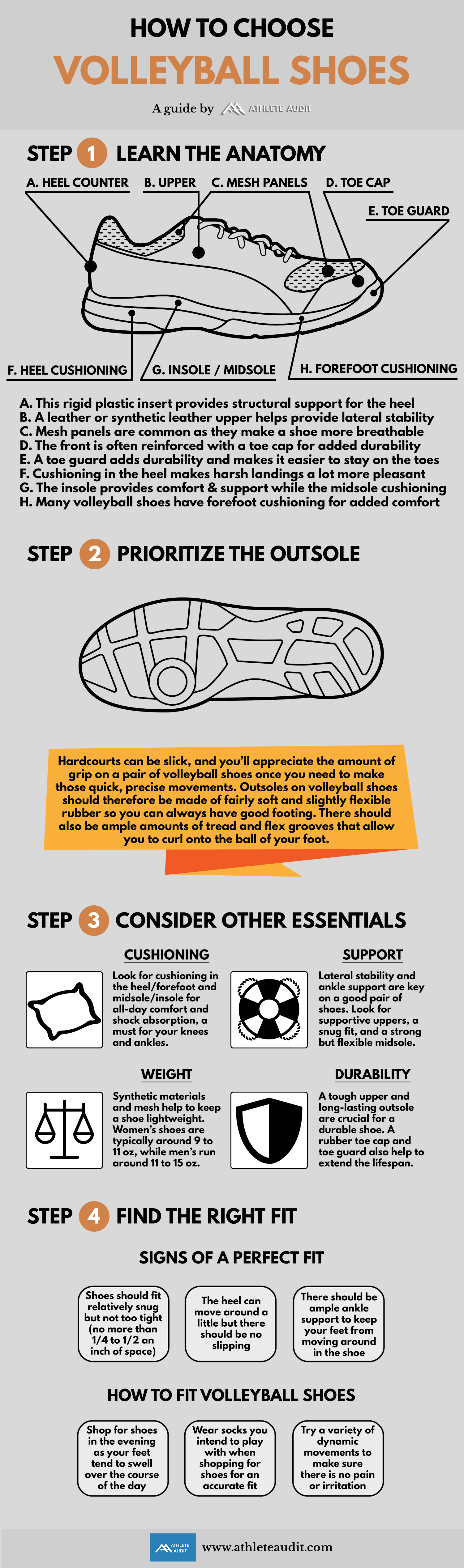
How to Choose Volleyball Shoes: In-Depth
Step 1: Learn the Anatomy
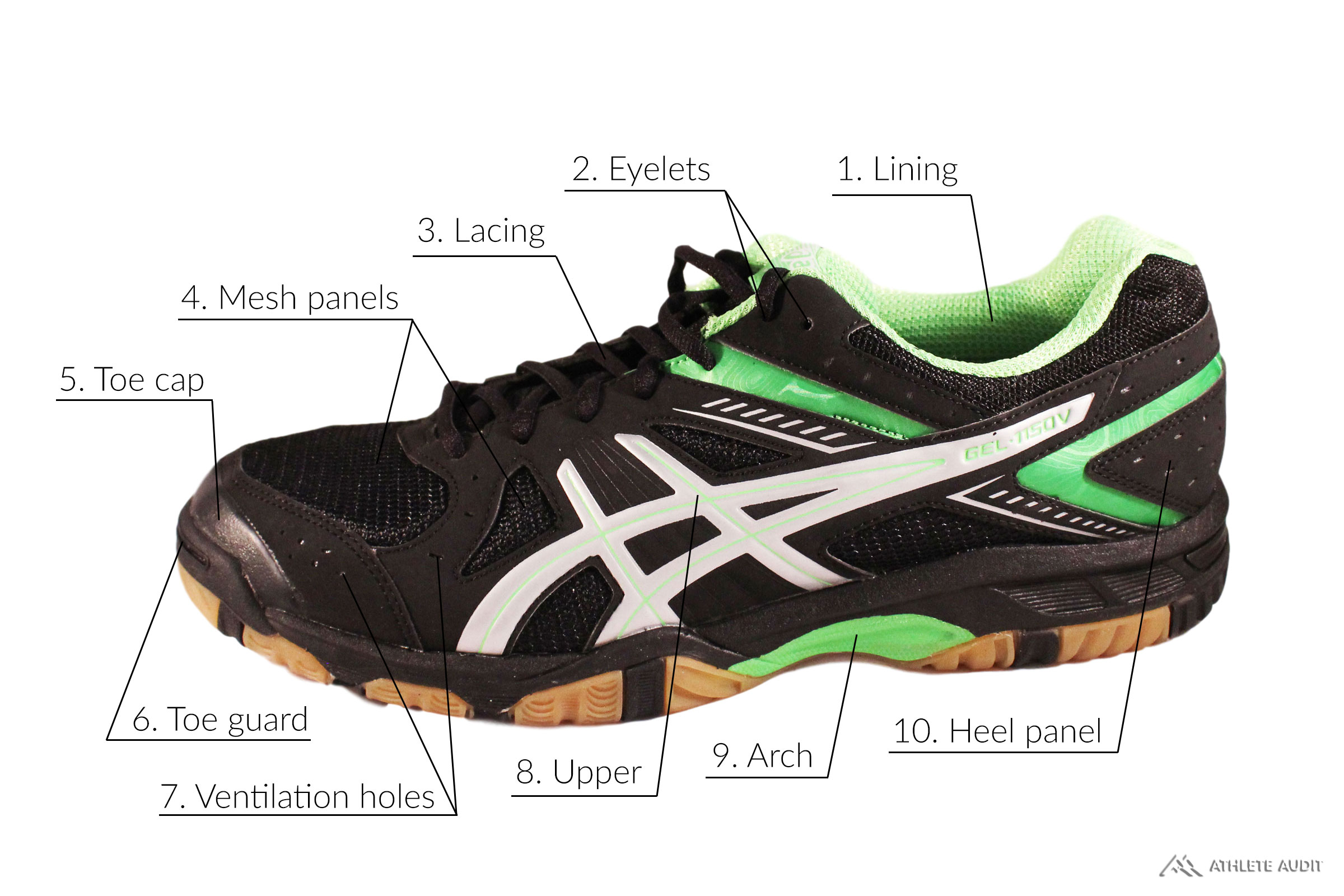
- Lining - A comfortable sock-like fabric sits on the inside of the shoe, covering the foot
- Eyelets - Holes on either side of the tongue that guides the laces in place
- Lacing - Traditional laces help provide the most adjustment in fit
- Mesh panels - Some volleyball shoes feature mesh panels that make the shoe more breathable
- Toe cap - Often reinforced for added durability, since most of the sport is played on the toes
- Toe guard - A rubber toe guard helps to improve durability while making it easier to stay on the toes
- Ventilation holes - Helps to add ventilation to get rid of moisture
- Upper - Often made of a tough material such as leather or synthetic leather for lateral stability
- Arch - The middle area of the shoe. Some volleyball shoes offer arch support
- Heel panel - The fabric covering the heel of the shoe
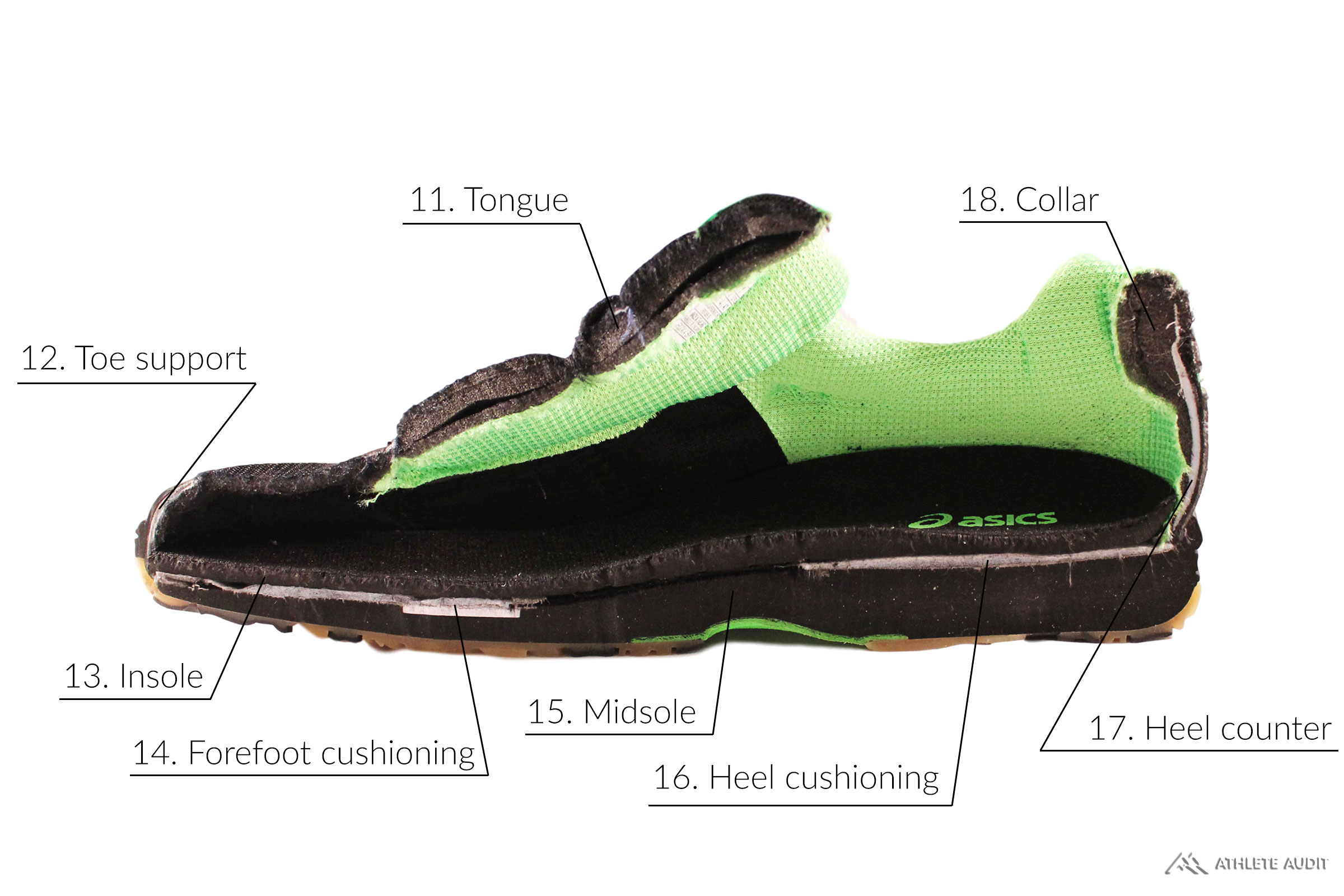
- Tongue - A well-padded tongue helps to increase comfort, fit, and protection
- Toe support - Some volleyball shoes have additional toe support in the form of a plastic insert
- Insole - The footbed of the shoe, adds comfort and orthotic support. Some can be removed
- Forefoot cushioning - Some shoes make use of forefoot cushioning for harsh landings on the forefoot
- Midsole - Lies between the insole and outsole, provides cushioning and shock absorption. Thicker in the heel like a running shoe
- Heel cushioning - Cushioning in the heel can be added for harsh landings on the heel area
- Heel counter - A rigid plastic insert in the back of the shoe that provides structural support for the heel
- Collar - A nicely padded collar helps to improve comfort and fit
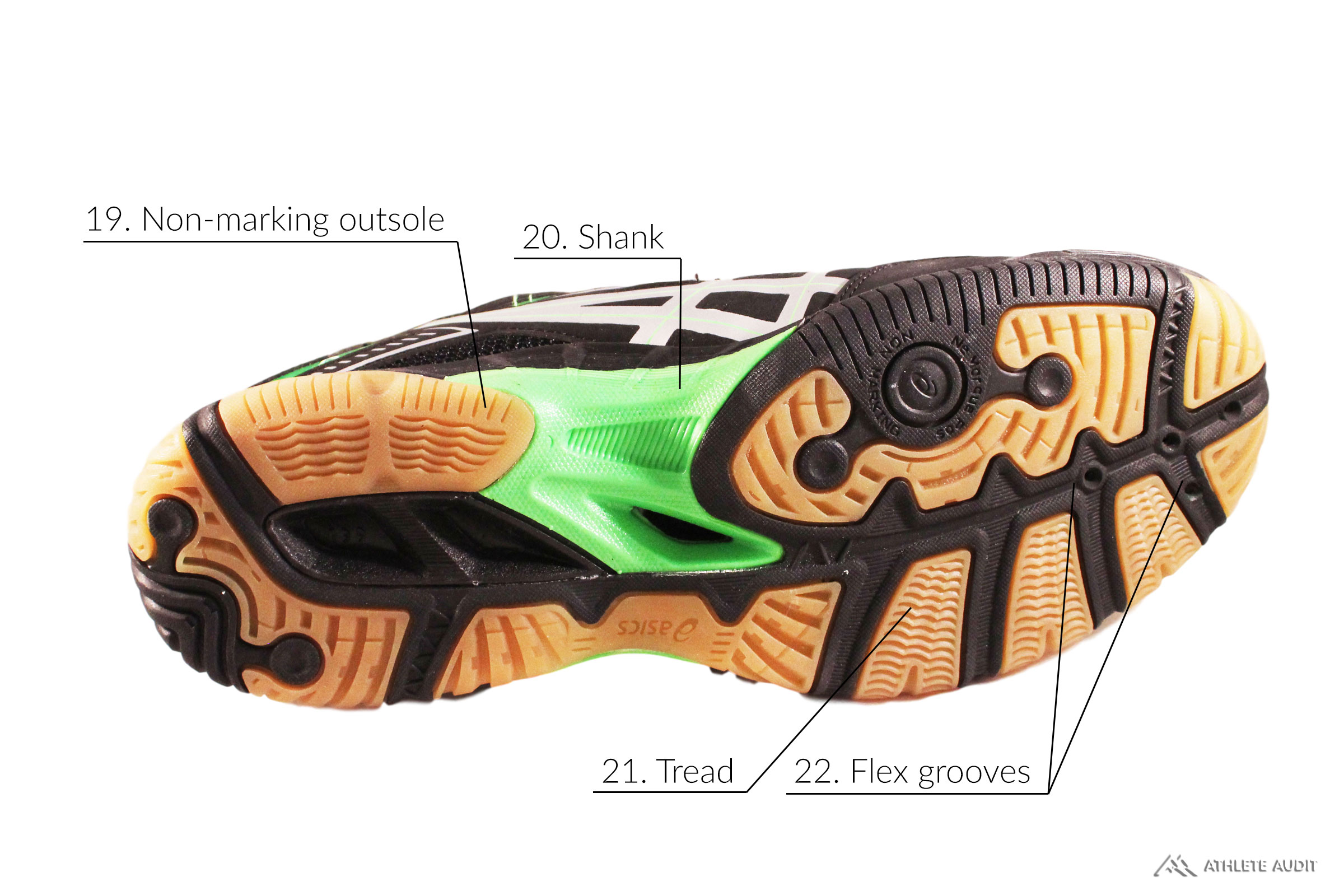
- Non-marking outsole - A special non-marking rubber helps to provide superior traction without streaking the court
- Shank - Some volleyball shoes make use of a shank, which is an insert between the insole and outsole that provides support
- Tread - A herringbone tread pattern provides a ton of grip on slick volleyball courts
- Flex grooves - Helps to add flexibility to the shoe, which is very important since volleyball is such a dynamic sport
Step 2: Prioritize the Outsole
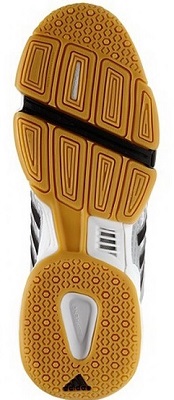 What separates volleyball shoes from a lot of other athletic shoes is the superior traction they provide on the court. Hardcourts can be slick, and you’ll appreciate the amount of grip once you’re out there making those quick, precise movements. A lot of volleyball players even look to increase the traction of their shoes even more to prevent any sliding. For the most part, however, outsoles should be made of fairly soft and slightly flexible rubber to help provide you with good footing. There should also be ample amounts of tread and flex grooves that allow you to curl onto the ball of your foot. You’ll notice that many companies create their volleyball shoes with intricate tread patterns for one specific reason: amazing traction.
Step 3: Consider Other Essentials
Cushioning
Volleyball consists of a lot of jumping around, which can be tiring for your feet without proper cushioning. Landing on the hard ground after a high jump or take-offs can cause a good amount of shock, and over time is not good for your ankles and ligaments. Thus, cushioning in the heel/forefoot and via the midsole/insole should be excellent for the most impact absorption. Cushioning also provides general comfort for if you play volleyball for long, whether it’s every day or for all-day tournaments.
Support
When learning how to choose volleyball shoes, it’s important to talk about support as well. Volleyball requires lots of side-to-side movements which is why lateral and ankle support are extremely important. Quick side-to-side movements can put a lot of strain on your ankles, and the last thing you want is a sprained ankle. Along with great traction, the midsole plays a big role in supporting the ball of your foot. The midsole should be extremely strong while also allowing for some flexibility so that your feet aren’t locked in one position. Defenders should look into shoes that have excellent stability in all directions to aid in holding your ground when blocking shots.
Weight
Most volleyball shoes are are very lightweight so players can remain agile. Women’s shoes typically run around 9 to 11 ounces, while men’s shoes can be anywhere from 11 to 15 ounces. However, this really depends on who makes the shoe, the style, materials used, and the size. Many volleyball shoes consist of either synthetic materials and mesh for light weight and breathability. Of course, there are other variables at play when choosing volleyball shoes so it’s important to find a good balance between the other qualities for a shoe that fits your playing style.
Durability
Durability is often something people will ask about when first learning how to choose volleyball shoes. Volleyball shoes should be reinforced in the right places to keep the upper from wearing out prematurely. Durability is directly tied to a tough upper and long-lasting outsole. If you play volleyball more frequently, expect a shoe to wear out more quickly. Under normal conditions, a high quality volleyball shoe should last at least one full season if played 4-5 times a week. If you play more casually, your shoes should last you a good deal longer, perhaps a year or more. What happens to most shoes over time is either the traction loses its edge, support diminishes around the ankle/laterally, or materials just start to fall apart.
Step 4: Find the Right Fit
Signs of a Perfect Fit
- Shoes should fit relatively snug but not too tight (no more than 1/4 to 1/2″ of space)
- The heel can move around a little but there should be no slipping
- There should be ample ankle support to keep your feet from moving around in the shoe
- No discomfort at all, whether standing still, walking, running, jumping, or changing directions
- You should be able to naturally bend on the ball of your foot
How to Fit Volleyball Shoes
- Shop for shoes in the evening as your feet tend to swell over the course of the day
- Wear socks you intend to play with when shopping for shoes for an accurate fit
- Try a variety of dynamic movements to make sure there is no pain or irritation


