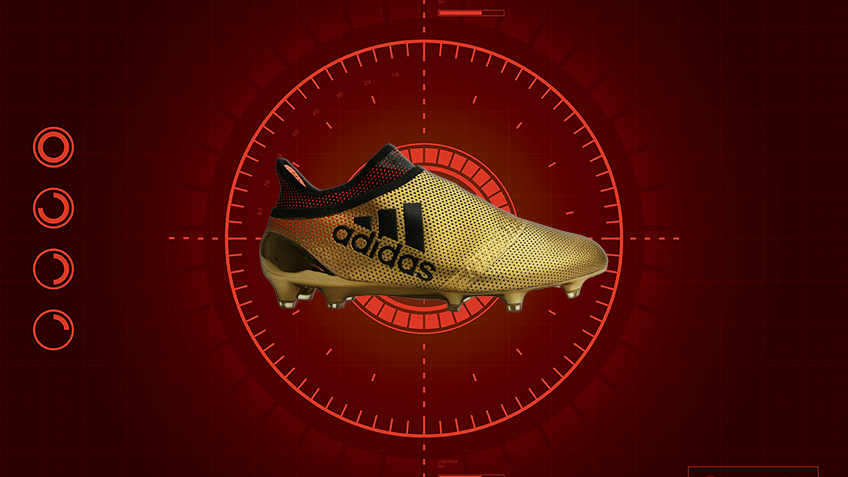
Parts of a Soccer Cleat
- Lining - The sock-like fabric on the inside of the shoe, improves comfort
- Eyelets - Holes in the upper help to keep the laces in place
- Lacing - Soccer cleats use traditional laces allowing for the most adjustment in fit
- Toe box - A flexible toe box allows for efficient running and dynamic movements
- Vamp - Covers the forepart of the cleat, provides excellent feel
- Upper - Thin, lightweight material such as leather, kangaroo leather, or synthetics is often used for a better feel
- Heel panel - The piece of fabric covering the heel
- Tongue - A thin tongue with minimal padding helps to improve feel
- Insole - The footbed of the cleat, provides comfort and support
- Last - Underneath the insole lies the last, which determines the shape of the cleat
- Midsole - The cushioning in-between the insole and outsole, thin which allows you to feel the ground more
- Heel cup - A snug heel cup helps to lock down the heel
- Heel counter - The rigid plastic insert behind the shoe that keeps the structural integrity of the heel
- Collar - A padded collar helps to improve comfort and fit
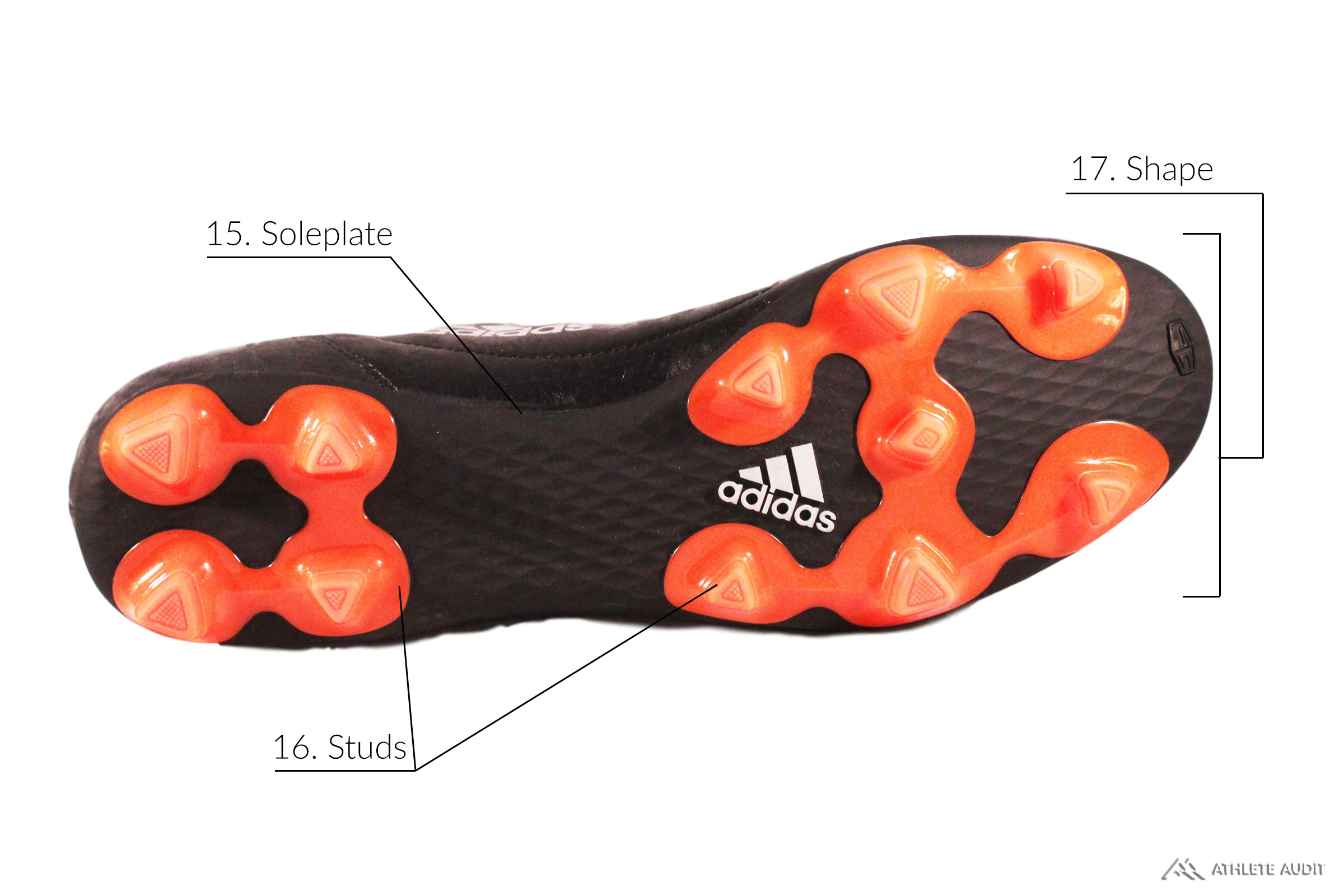
- Soleplate - A stiff, lightweight soleplate houses the studs
- Studs - Often made of molded plastic, provides traction on soccer fields
- Shape - Determined by the last, the shape of a cleat will affect the fit in the heel, arch, and forefoot
Learn how to choose soccer cleats here