

If you’re just starting off skateboarding, we’d like to give you some tips on how to choose skate shoes. There’s a lot of variety out there and different skate shoes suit different types of skateboarders. Whether you’re a high impact skateboarder who likes to jump off things, someone who likes to skate flatground or ledges, or one that loves transition and pools, there are different things to look for in a skate shoe to suit each of these styles of skateboarding. Material, type of rubber, boardfeel, grip, and cushioning are just a few. And of course, how could we forget aesthetics? Skate fashion is constantly evolving, but knowing the ins and outs of a skate shoe will help you to find a pair that best suits your needs. With this in mind, let’s find out how to choose skate shoes today!
How to Choose Skate Shoes Infographic
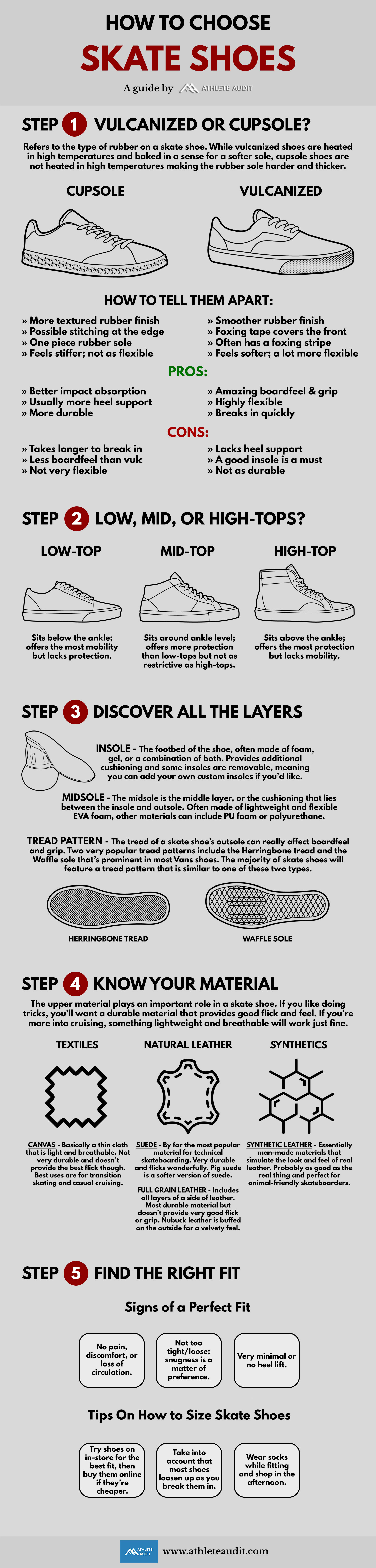
How to Choose Skate Shoes: In-Depth
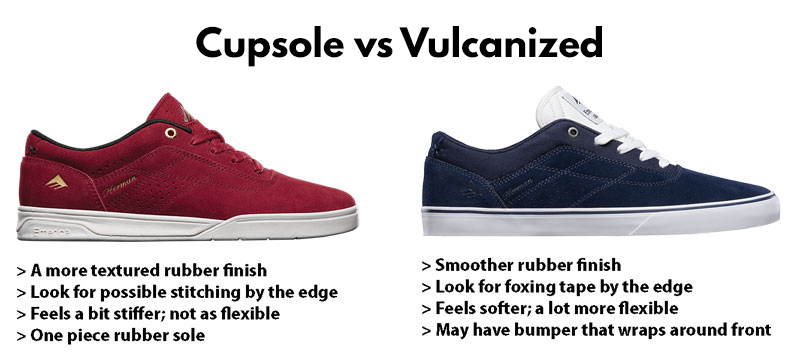
Step 1: Vulcanized or Cupsole?
Are you in the vulcanized rubber camp or the cupsole camp? Essentially, this is referring to the rubber outsole and all skate shoes come in either one form or the other. Both types of rubber skate differently and so serve different purposes. It’s all a matter of personal preference in what you choose.
- Vulcanized - The rubber is heated in high temperatures and pressed a lot quicker. While it’s gummy and very soft, it gets applied directly to the sole of the shoes. As a result, vulcanized soles are a lot softer and provide amazing boardfeel and grip. They are also more flexible and break in quickly as well. The trade-offs, however, is impact protection as it is softer than the rubber used for cupsoles. It is also not as durable and lacks the heel support that cupsoles offer.
- Cupsole - Cupsole construction is where the sole is either stitched, glued together, or a combination of both. Cupsoles are unique in that they offer more protection in regards to foot/ankle support and impact absorption. They also tend to be more durable. Of course, the downside is less boardfeel and durability, although some shoe companies are greatly improving on the feel of cupsoles.
Step 2: Low-tops, Mid-tops, or High-tops?
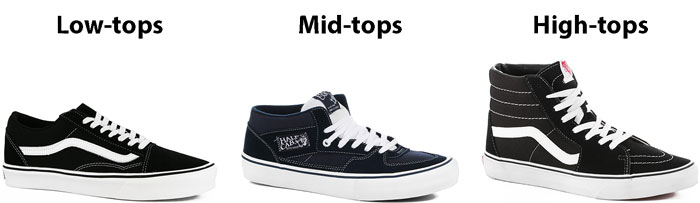
Based largely on personal preference, there are some pros and cons to each.
- Low-tops - Sits below the ankle. Provides more freedom of movement but less ankle support and security.
- Mid-tops - Sits around ankle level. Offers more support than low-tops but not as bulky or restrictive as high-tops.
- High-tops - Sits above the ankle. Offers the most protection for your ankles but can hinder your mobility.
Step 3: Discover All the Layers
Also when learning how to choose skates shoes, you’ll need to know about all the layers involved. First off is the cushioning. Most of the cushioning you’ll find lies in the midsole, insole, and the heel. Typically, skate shoes with more cushioning will have less boardfeel, although that’s slowly changing. If you like chucking yourself down flights of stairs or gaps, skating large handrails or hubbas, or catching huge airs, you’ll need a pair of skate shoes with superb cushioning to absorb impact and prevent heel bruises. There is also the tread which refers to the grooves and pattern of the outsole.
- Midsole - Most often made of EVA foam which is lightweight and flexible, midsoles lie just above the outsole and provide a good amount of cushioning. Other materials used include PU foam (lasts longer) or polyurethane.
- Insole - The insole lies on top of the midsole and is often made of foam, gel, or a combination of both. For shoes that feature a removable insole, you can take them out if they’re not providing good enough cushioning and drop in another pair that does. If the insole is thin enough, you can even add a second insole although boardfeel will be sacrificed. There are even companies that specialize in making skate insoles (Footprint, Remind, and Etcetera).
- Heel cushioning - Some shoes feature extra cushioning in the heel in the form of gel inserts or airbags.
- Tread Pattern - The tread of a skate shoe’s outsole can really affect boardfeel and grip. Two very popular tread patterns include the Herringbone tread and the Waffle sole that is prominent in most Vans shoes. The majority of skate shoes will feature a tread pattern that is similar to one of these two types.
Step 4: Know Your Material
This is mostly referring to the upper material used for skate shoes as it makes the most contact with a board. Consider the skateboarding you’ll be doing to find the right material for you. Material plays a huge part in durability and a good amount for feel and flick.
- Suede - Possibly the best material for skate shoes. It is durable, can handle a good amount of abuse, and flick wonderfully. The skateboarding gods graced the skateboarding world when they introduced suede.
- Pig Suede - Pig suede is a lot softer than regular suede producing better flick and feel. However, durability is the trade-off. It’s more expensive and rarer to find too.
- Full grain leather - Includes all layers of a side of leather. It’s the most durable material although it doesn’t provide very good flick or grip. Most skateboarders aren’t into it.
- Nubuck leather - Leather that’s buffed on the outside for a velvety feel. More durable than suede but doesn’t skate as well. It’s harder to find on skate shoes as well.
- Canvas - Canvas is basically cloth that is lighter and more flexible. Not known for being very durable or proving good flick, its best uses are for transition skating and casual cruising
- Synthetics - Essentially man made materials that simulate the look and feel of real leathers. Probably as good as the real thing. Also perfect for vegetarians and vegans.
Step 5: Find the Right Fit
Signs of a Perfect Fit
- No pain, discomfort, or loss of circulation.
- Not too tight/loose; snugness is a matter of preference.
- Very minimal or no heel lift.
Tips On How to Size Skate Shoes
- Try shoes on in-store for the best fit, then buy them online if they’re cheaper.
- Take into account that most shoes loosen up as you break them in. Don’t let first fittings fool you!
- Wear socks while fitting and shop in the afternoon when your feet have swelled to its largest size.
Optional: Learn Skate Shoe Lingo
Boardfeel
When you ask someone how to choose skate shoes, a good number of people will talk about boardfeel. Boardfeel refers to how sensitive your shoes are in feeling your board underneath you (as you may have guessed). This allows for better flick, catch, feeling, and all in all a better bond with your skateboard. As we’ve discussed, vulcanized soles have more boardfeel than cupsoles, but offer less cushioning and support. Many shoes have a thinner toe area to increase boardfeel while leaving the heels thicker for more protection. If you’re more into flatground, technical, or ledge skating, you’ll appreciate skate shoes with lots of boardfeel.
Grip
Equally important as boardfeel is grip, or, how well your shoes can stay on your skateboard without any slippage occurring. Grip is directly correlated to the type of rubber a shoe uses. Stiffer rubbers don’t provide very good grip while very soft rubbers can make it hard to flick. It’s really up to you to find the right amount of grip for you. Typically, however, vulcanized shoes provide better grip than cupsoles because of its softer nature.
Toecap
A rubber toecap can be added to the front of the shoe to increase durability. Many popular styles of skate shoes sport toecaps these days, and they are worth every penny!
Stitching
Most skate shoes feature double or triple stitching to increase durability and prevent blowouts. Of course, you could always go for one piece toecaps to prevent blowouts from ripped stitching altogether.


