
Track and field houses many events, all of which will require specialized shoes in order for you to perform at your very best. First and foremost, there are varied disciplines for the track, with spikes having subtle differences that will affect your running. Then you have field shoes, which also has separate specialties such as jumping and throwing events. And one pair of shoes just won’t cut it if you’re into more than one type of event. There are actually a ton of factors you’ll have to consider to find the right pair(s) for you. That”s why we decided to throw together this useful little guide on how to choose track spikes and field shoes. It’ll go over everything you need to know including event specific spikes and shoes, types of spikes, spike length, how to fit them, tips, and more. Are you ready? You better be, let’s start!
How to Choose Track Spikes and Field Shoes Infographic

Share This Guide On Your Site
How to Choose Track Spikes and Field Shoes: In-Depth
What Events Are You Into?
Whether you participate in track events or field events, there are different shoes for each discipline. Shoes meant to be worn on the track are specially referred to as track or running spikes, whereas shoes for field events can be separated into “jumping spikes” and “throwing shoes”.
Track Events
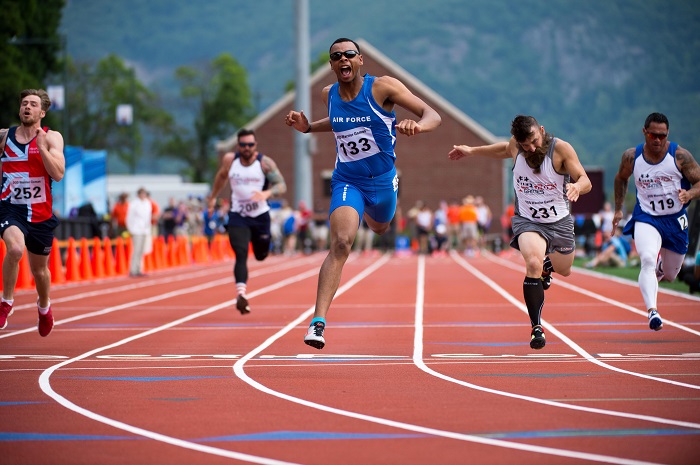
Sprints - Usually anywhere from 200-400m where there are either one or no turns. While sprinting, you are encouraged to run on the ball of your forefoot. That’s why most sprinting spikes only have spikes in the very front of the outsole with very little padding. They also tend to have the most amount of holes to house spikes. Most sprinting spikes have stiff plates in order to provide a more responsive and springy feel. If you’re sprinting closer to 400m, it might be wise to find spikes that are a little more flexible.
Middle-distance - Anywhere from 800-5000m, middle-distance spikes will help you run fast while remaining comfortable for longer distances. They have some attributes of both sprinting and long-distance spikes, such as a balance of flexibility and rigidity, some cushioning, and torsion so that turning will be easier.
Long-distance - Long-distance events are anything over 5,000m. Spikes for these types of events will be light, flexible, and durable. In fact, long-distance spikes will be the most flexible while featuring lots of cushioning to keep you pain-free and comfy.
Hurdles - Most hurdlers look for either a flexible sprint spike or middle-distance spike since there is some heel cushioning to prevent injuries.

Jump Events
The triple jump, long jump, and pole vault are very similar, and you can see it in the similarity of the shoes (most resembling sprint spikes where you run on the ball of your forefoot). Spikes for these three events will have a thin, full-length midsole for support, stability, and comfort while planting. The high jump spikes are a bit different, however.
 Long jump - Spikes are labeled LJ, there should be ample amounts of padding in the heel to provide cushioning when landing.
Triple jump - Spikes are labeled TJ, and may have a slightly different heel than LJ spikes with lots of cushioning to prevent heel bruises.
Pole vault - Often labeled PV but can also be LJ/TJ spikes since they are very similar. Features a heel-to-toe offset to help make the transition from running to vaulting easier.
High jump - Similar to the javelin boots where spikes can be found on the front and heel of the shoe. A strap is very common to provide lockdown/support of either the forefoot or midfoot.
Throwing Events
Most throwing shoes will be flexible with a wide, flat-bottom outsole (with the exception of the javelin throw). Categorized as either rotational shoes for better spin, OR glide shoes with a textured outsole for grip (again, with the exception of the javelin throw).
 Javelin throw - Most commonly known as javelin boots, which are bigger, heavier, and offer more support (especially around the ankle). Comes in either low-top, mid-top, or high-tops. Features spikes unlike other throwing shoes.
Hammer throw - Features a smooth and slightly rounded outsole to allow for natural rotation. Some brands label these shoes as rotational or hammer/discus.
Discus throw - Often has a flat, wide base and a smooth, rounded outsole as well. Some brands label these shoes as rotational or hammer/discus.
Shot put - Should be slightly curved with a wide, flat heel and slightly textured outsole for more lateral stability. Some brands label these shoes as SD or shotput.

Spike Types/Length
Types
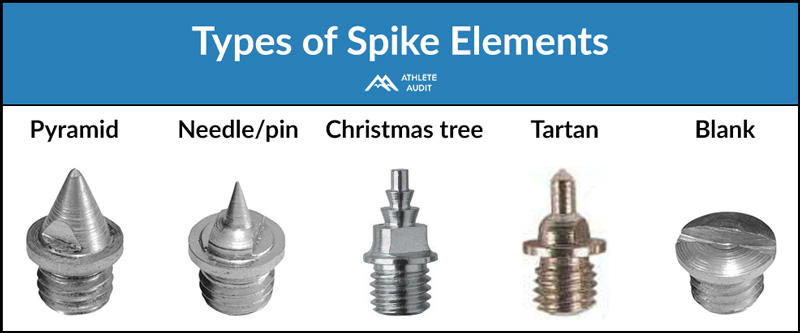
Spike types, or “elements”, come in a variety of shapes that each serve a specific purpose. Always check to see what spikes are allowed on a track before you use them.
Pyramid - A classic spike meant for hard tracks, rubber, dirt, and grass. Most common length is 1/4″.
Needle/pin - Also known as “slim” since they are slimmer than pyramid spikes. Best on all-weather tracks. Most common size is 3/16″.
Blanks - Blanks, or “studs”, have no spikes and should be worn indoors or on tracks where spikes aren’t allowed. You also use them to fill in spike wells.
Christmas tree - Also known as “X-mas tree” or compression spikes, their unique design prevents the spikes from sticking into the track too much. Made for softer tracks like rubber or tartan surfaces. Most common length is 1/4″.
Tartan - Has a cylindrical shaft and a pointy spike at the top; for rubber tracks only.
Length
Spike elements also come in a variety of lengths as well, and how long your spikes are can really affect the way you run. Spikes come in 1/8 “to 5/8″ lengths, and some events only allow a certain length, so it’s also worth it to check what spikes you can use beforehand. If you are ever in doubt, go with the 1/4″ spikes since the maximum allowable spike length for most outdoor tracks is 7mm, or roughly 1/4″. For muddy tracks, use longer spikes such as 1/2″ or 5/8″. For javelin throwers, go with 7/16″ or 1/2”.
***Always carry a few extra sets of spikes in different lengths as well as a wrench or needle nose pliers so you can be ready for any race!***
How to Fit Track Spikes and Field Shoes
- Socks or no socks? Some athletes don’t wear socks because they like the better fit and feel for the track. Others enjoy wearing socks because it prevents blisters and burns. Whatever your choice is, determine early on what camp you’ll be in and take that into account when sizing. Even thin socks can change the fit of shoes completely. If you do choose to wear socks, wear them while trying on a new pair of spikes.
- Try on track spikes in person for the best fit. If you must purchase online, make sure returns are available and order a few similar sizes and return the ill-fitting ones.
- Depending on what event you’re participating in, make sure there is proper support in the right areas, whether it’s the forefoot, midfoot, ankle, heel, or achilles.
- Track spikes and field shoes should fit very snugly (like second skin) for maximum running efficiency. Most track and field athletes size down a half or full size from their running shoes.
- If possible, try jogging in the shoes to see if they fit right while in motion.
- You should have a tiny bit of wiggle room for your toes and they should not feel pinched or cramped.
- Don’t expect there to be a break-in period with track and field shoes. If a pair of spikes or shoes are really uncomfortable or painful, chances are they’ll stay that way.


